Case files
The cases behind
the drawings.
Every portrait in these books started as a real case. These are the facts of them — the dates, the victims, what the record does and doesn’t say — and the book each portrait comes from at the end.
-
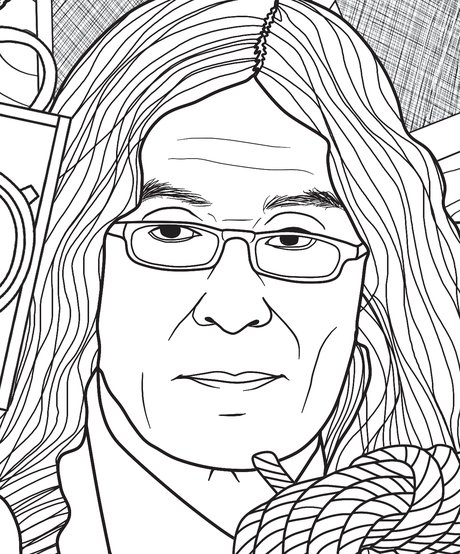
Joe Metheny: the Baltimore confessions, a death sentence undone, and what was never proved Joe Metheny told Baltimore detectives in December 1996 that he had killed far more people than anyone could prove, and led them to a grave no one had known about. He was convicted of killing two women, sentenced to death once, and spared by Maryland’s highest court on a point of law about a purse and a bundle of clothes.
-
Henry Louis Wallace: the Taco Bell Strangler and the pattern Charlotte police missed For almost two years a man killed young Black women in Charlotte, most of them his friends and co-workers, and police did not see that the deaths were connected. When he was finally arrested in March 1994 he wrote down more names than detectives knew, and the city had to ask why it had taken so long.
-
Paul Dennis Reid: three restaurants, seven death sentences and a fight over his mind In the spring of 1997 robberies at a Captain D’s, a McDonald’s and a Baskin-Robbins left seven workers dead in Middle Tennessee. The man convicted of all three spent the next sixteen years under sentence of death while courts argued over whether he was sane enough to choose to die.
-
Daniel Lee Siebert: the Talladega killings, a call in the rain and a death on death row In February 1986 a drifting painter who called himself Daniel Spence killed a young deaf woman, her two small sons and her neighbour in Talladega, Alabama, then vanished. He was sentenced to death twice, told investigators of many more killings, came within a day of execution in 2007 and died of cancer in his cell the following spring.
-
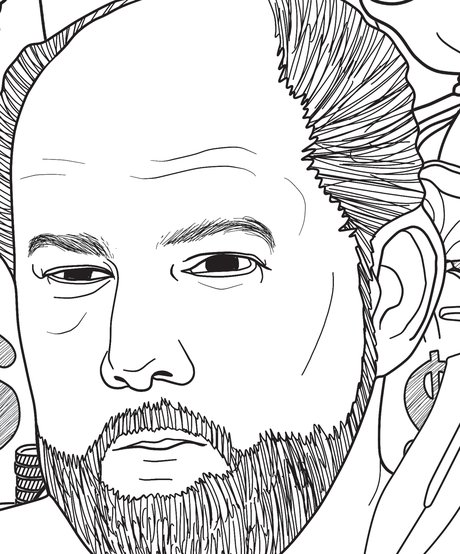
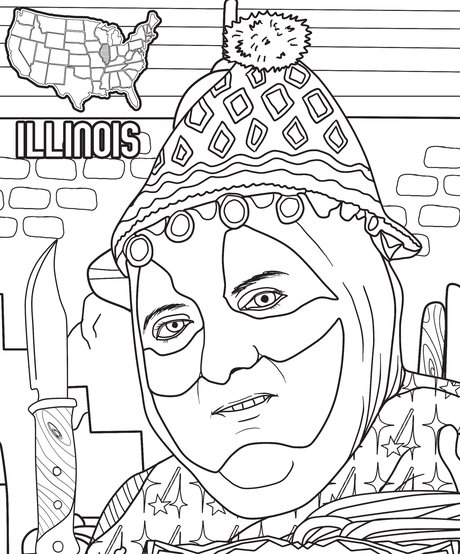
Larry Eyler: the Highway Killer, the suppressed evidence and the confession after death Early in 1984 a judge ruled that the evidence police had gathered against Larry Eyler in a murder case had been obtained illegally, and he walked out of jail. Six months later a boy’s body was found in a dumpster behind his Chicago apartment building; he died on death row ten years on, and only then did his lawyer release a list of 21 killings he had admitted to her.
-
Anthony Sowell: the Imperial Avenue killings, the reports before and the reforms after In October 2009 Cleveland police went to Anthony Sowell’s house on Imperial Avenue to arrest him on a rape complaint and found the remains of the first of 11 women. He was sentenced to death in 2011, the city rewrote how it handled missing-person and sex-crime reports, and he died in prison in 2021 before any execution.
-
Donald ‘Pee Wee’ Gaskins: the Prospect graves, two death sentences and a bomb on death row In December 1975 a search for a missing girl led investigators to graves in the woods near Donald Gaskins’s home in Florence County. Spared execution once when South Carolina’s death-penalty law fell, he killed a fellow prisoner on death row, and that killing sent him to the electric chair in 1991.
-
Carl ‘Coral’ Eugene Watts: the Sunday Morning Slasher and the plea deal that nearly freed him In 1982 Texas prosecutors traded a burglary plea and a 60-year sentence for Coral Eugene Watts’s confessions to a dozen killings, with immunity for every one. Two decades later that sentence was about to run out, and Michigan went back to its cold cases to keep him in prison.
-
Robert Hansen: the Anchorage baker, a teenager’s escape and the map behind the headboard For about a decade Robert Hansen ran a bakery in Anchorage, flew his own plane and took women from the city into the wilderness. In 1983 a 17-year-old got away from him in handcuffs, and the man the courts had let go several times confessed to 17 killings and pleaded guilty to four.
-
Bobby Joe Long: the ‘Classified Ad Rapist’, eight Tampa murders and the girl who got away For eight months in 1984, women were found dead around Tampa Bay, and investigators had little more than a few red carpet fibers. Then a 17-year-old he had abducted talked her way free, remembered what she could, and led police to a man who turned out to be the ‘Classified Ad Rapist’ as well.
-
Donald Harvey: the hospital orderly, a cyanide autopsy and a TV anchor’s tip-off For 17 years Donald Harvey moved between hospitals in Kentucky and Ohio, and patients died around him. In 1987 a pathologist smelled cyanide, a television anchor followed the nurses’ tips, and the man police had charged with one murder pleaded guilty to dozens.
-
Israel Keyes: the Anchorage arrest, the buried caches and the FBI’s count of eleven Israel Keyes was arrested in Texas in March 2012 over the disappearance of a young woman in Anchorage, Alaska, and over the following months told investigators he had killed others across the country. He killed himself in jail before he could be tried, leaving the FBI to piece together the rest from his own words.
-
Dean Corll: the Candy Man, the boat shed and Houston’s lost boys For nearly three years boys vanished from one Houston neighbourhood and police wrote them off as runaways. Then, in August 1973, a teenager shot the friendly former candy maker who had recruited him and led detectives to the graves.
-
Rodney Alcala: the Dating Game Killer, three trials and a Wyoming charge never tried In 1978 a man who had served prison time for attacking a child won an episode of a television dating show, introduced as a photographer. A year later he was arrested for killing a 12-year-old girl, and it took three trials, guilty pleas in New York and a photograph recognised by a murdered woman’s family to show how far his crimes reached – a question that remains open.
-
Richard Kuklinski: the Iceman, the cyanide sting and a body count in doubt Richard Kuklinski was caught in 1986 by an undercover agent who offered him cyanide, and was convicted of murders committed for money and to silence accomplices. In prison he recast himself as a Mafia hit man with a vast tally of victims, a story the agent who caught him and leading Mafia reporters do not believe.
-
Nannie Doss: the ‘Giggling Granny’ who confessed to poisoning four husbands In October 1954 a man died in a Tulsa hospital and his doctor could not say why. His widow signed the form for an autopsy. It found arsenic, and within weeks she had confessed to poisoning four of her five husbands, in four different states.
-
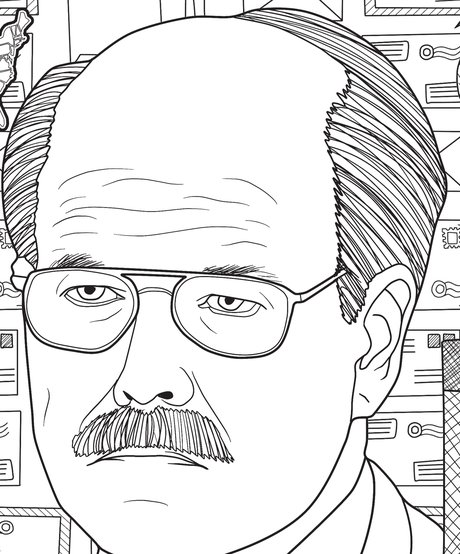
Jeffrey Dahmer: the Milwaukee killings and the police call that went wrong In July 1991 a man with a handcuff on one wrist flagged down a police car in Milwaukee. The apartment he led the officers to held the remains of eleven people, and the city soon learned that police had been inside it two months earlier.
-
John Wayne Gacy: the ‘Killer Clown’, the crawl space and 33 murders In December 1978 a 15-year-old left his job at a Des Plaines pharmacy to talk to a building contractor about summer work, and never came back. Ten days later police were digging under the contractor’s house. He was known locally as a party host, a Democratic precinct captain and a clown.
-
Dennis Rader: the BTK killer, the floppy disk and the Park City code officer For three decades the man who called himself BTK was a signature without a face in Wichita. In 2005 a computer disk he sent led police to a church congregation president and suburban code officer, who months later stood up in court and pleaded guilty to ten murders.
-
Gary Ridgway: the Green River Killer and the deal that traded his life for answers In 1987 detectives took a saliva sample from a truck painter they had suspected for years, and could prove nothing. In 2001 a new DNA test matched it to three of the earliest victims. Two years later the man who had passed a polygraph in 1984 confessed to 48 murders in exchange for his life.
-
Gerald and Charlene Gallego: the ‘sex slave’ murders and the wife who testified In November 1980 a young man wrote down the licence number of a car leaving a Sacramento parking lot. It led to a man whose father had died in Mississippi’s gas chamber, and to his young wife, who would trade her testimony for a fixed prison term and describe ten killings across three states.
-
Randall Woodfield: the Packers draft pick who became the I-5 Killer In 1974 the Green Bay Packers drafted a wide receiver from Portland State. Seven years later he was serving life plus 90 years for a murder near Salem, and police called him the I-5 Killer. He has never confessed, and he has been charged with only one killing.
-
Fritz Haarmann: the Hanover killer who worked for the police Between 1918 and 1924 a petty criminal who informed for the police picked up boys and young men at Hanover’s main station. In the spring of 1924 children found human skulls on the banks of the river. He was convicted of 24 murders and executed in 1925; how many he really killed, nobody knows.
-
Elizabeth Báthory: the countess who was never tried, and how 650 became a legend In December 1610 the most powerful man in Hungary arrested a widowed countess at her manor at Čachtice. Her servants were tried and executed within days. She was never tried at all, and spent her last four years locked in a castle. Four centuries later she is called the most prolific female killer in history, on evidence that does not hold that weight.
-
Andrew Urdiales: the ex-Marine convicted in two states, and the gun that tied him to eight killings Between 1986 and 1996 he killed eight women, five in Southern California while he was a Marine and three around Chicago after he came home. A handgun police took from him at a traffic stop in Indiana matched the Illinois killings. He confessed to all eight, was sentenced to death in both states, and died on death row in 2018.
-
Charles Cullen: the nurse who moved through ten hospitals and the records that stopped him For sixteen years he worked in intensive care and cardiac units in New Jersey and Pennsylvania. He was fired or pushed out again and again, and hired again every time. In 2004 and 2005 he pleaded guilty to 29 murders; he told detectives there were as many as 40.
-
Harold Shipman: the Hyde GP, the forged will and the inquiry that counted his victims For more than twenty years he was the doctor elderly patients in Hyde asked for by name. A badly typed will brought him down in 1998. He was convicted of fifteen murders; a public inquiry later concluded he had killed about 250 people.
-
Richard Ramirez, the Night Stalker: the true story of the 1985 manhunt For five months in 1985 a man broke into homes across Los Angeles County at night. He was caught by residents of an East Los Angeles street the day after his photograph appeared in the papers. The court record of what he did is long; this page keeps to what it proves.
-
Ed Gein: the true story of the Plainfield grave robber behind Psycho He killed two women and robbed about nine graves in a small Wisconsin town, and the things found in his farmhouse in November 1957 went on to shape Psycho, Leatherface and Buffalo Bill. The record is stranger, and smaller, than the legend.
-
The Zodiac Killer: five murders, four ciphers and a case that is still open Four attacks, seven victims, five dead. Then five years of letters and ciphers to the San Francisco papers, one of which took 51 years to read. Nobody has ever been charged, and the FBI still lists the case as open.
-
Aileen Wuornos: seven men, six death sentences, and the myth of the “first female serial killer” She was billed as America's first female serial killer. She was not. What she was is documented in four Florida Supreme Court opinions: seven men in under a year, and a label the press gave her that was wrong from the start.
-
Graham Young: the Teacup Poisoner who was let out to poison again At fourteen he poisoned his family and was sent to Broadmoor. Eight years later his doctor recommended his release. Within months of his release, the men he made tea for at work began to die.
-
Ted Bundy timeline: every verified date, 1946 to 1989 Four years of attacks across six states, two jailbreaks, three trials and a decade on death row, laid out in the order it happened, with the places where the sources disagree marked.
-
Genene Jones: the nurse behind San Antonio's “Death Shift” Children kept dying on one shift in one intensive care unit. The hospital changed its staffing and said nothing. It took a clinic in a small town, a paralytic drug and, forty years later, a prison release date to bring the case to court.
-
Lizzie Halliday: the first woman sentenced to the electric chair She was condemned to the electric chair in June 1894 and never sat in it. Twelve years later she killed again, inside the asylum that had saved her from it.
-
Juan Vallejo Corona: twenty-five graves in the peach orchards Twenty-five men were buried in the orchards they had been hired to work. Four of them have never been identified.
-
Douglas Gretzler and Willie Steelman: seventeen killings in three weeks It ended in a farmhouse in Victor, California, with nine people dead in a single evening — two of them children — and the pair arrested in Sacramento the next day.
-
Christine Falling: the babysitter whose victims were ruled natural deaths Six people died around her in two and a half years. Every death but the last was written off as natural, and she was hired again each time.