Case file
Lizzie Halliday: the first woman sentenced to the electric chair
She was condemned to the electric chair in June 1894 and never sat in it. Twelve years later she killed again, inside the asylum that had saved her from it.
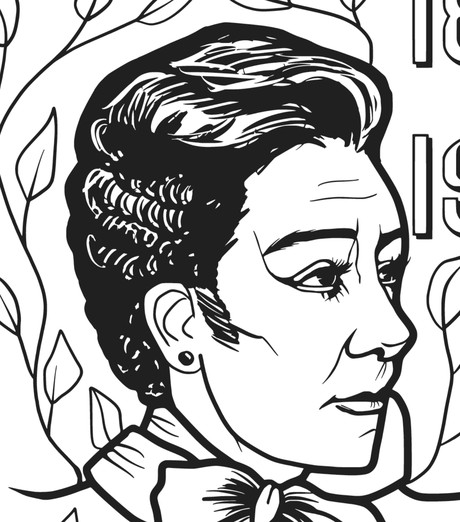
- Name at birthEliza Margaret McNally
- BornCounty Antrim, Ireland, about 1859
- DiedMatteawan State Hospital, Fishkill, New York, 28 June 1918
- Cause of deathBright's disease
- Convicted ofTwo murders; four deaths are firmly attributed to her
- SentenceDeath by electrocution, 21 June 1894 — commuted
Lizzie Halliday is remembered for a sentence rather than a body count. Four deaths are firmly attributed to her — three on a farm in Sullivan County, New York, and one inside a state asylum twelve years later. That is fewer than many killers nobody can name. What made her famous was that in June 1894 a court ordered her put to death in the electric chair, and no woman had ever been given that sentence before.
The New York Times called her the worst woman on earth. The phrase has been doing most of the work in coverage of her ever since. Below is what the record actually supports, and — separately — what it does not.
Ireland, Philadelphia, and a burned shop
She was born Eliza Margaret McNally in County Antrim, Ireland, about 1859, and was brought to the United States as a child. The year is not certain: some accounts give 1864. This is the first of several places where the sources disagree, and it is worth saying plainly rather than picking one and moving on.
What is documented is a long run of marriages. Ketspool Brown, who also went by Charles Hopkins, married her in 1879 and was dead by 1881. Artemus Brewer married her and died the same year. Hiram Parkinson left inside a year. She was accused of trying to poison George Smith with arsenic and fled. Charles Playstel vanished about two weeks after the wedding.
In the winter of 1888 she surfaced in Philadelphia at a saloon on North Front Street run by the McQuillan family, using the name Maggie Hopkins. She opened a shop there and burned it down for the insurance money. For that she served two years in Eastern State Penitentiary. It is the only crime she was convicted of before the murders, and it is the reason her name was already on a record when the bodies were found.
Burlingham, September 1893
By 1889 she was in Sullivan County, New York, working as housekeeper to Paul Halliday, a farmer roughly forty years older than she was. They married. In August 1893 neighbours noticed he had not been seen at the farm for several days running. Asked where he was, she said he had gone to Bloomingburg to do masonry work.
On 6 September 1893 neighbours obtained a search warrant. Under hay in the barn they found the bodies of two women, both shot, badly decomposed — one middle-aged, one younger. They were Margaret McQuillan and Sarah Jane McQuillan, of the same Philadelphia family Lizzie had lodged with, who had been taken on to work at the farm.
Paul Halliday was found a few days later, under the kitchen floorboards. His skull was fractured and he had three bullet wounds in the chest.
Nellie Bly, and a prisoner who would not talk
She said almost nothing useful to investigators. She refused to speak for long stretches, then gave accounts that contradicted each other and herself. The New York World sent Nellie Bly — who had made her name six years earlier by feigning insanity to get inside the asylum on Blackwell's Island — to interview her in jail. Bly's interview confirmed the string of marriages but got no confession worth the name.
The refusal to speak became evidence in the public mind. Contemporary coverage treated her silence as proof of something monstrous rather than as what it plainly also was: a defendant not incriminating herself.
The sentence that made her name
She was tried at the Sullivan County Oyer and Terminer court in June 1894, charged with the murders of Margaret and Sarah Jane McQuillan. On 21 June 1894 she was convicted of murder in the first degree and sentenced to death by electrocution, with the execution set for August.
New York had been using the electric chair since 1890. Every person put to death in it until then had been a man. Halliday was the first woman anywhere to receive that sentence, and that single fact is why a woman who killed four people in a rural county is still written about while others who killed more are not.
She never reached the chair. A medical commission examined her before the date and found her insane. Governor Roswell P. Flower commuted the sentence to life, and she was committed to the Matteawan State Hospital for the Criminally Insane at Fishkill.
Matteawan, and the killing of Nellie Wicks
She spent twenty-four years there. On 27 September 1906 she killed an attendant on her ward, Nellie Wicks. She followed Wicks into a lavatory, locked the door behind them, and stabbed her with a pair of scissors — accounts put the wounds at around two hundred, concentrated in the throat. Wicks died about two hours later.
There was no second trial. She had already been judged insane and was already held for life; there was nothing further the courts could impose.
She died at Matteawan on 28 June 1918, of Bright's disease — a kidney condition, and an ordinary death. She was fifty-eight or fifty-nine, depending on which birth year is right.
What the sources actually disagree about
Three things, and anyone writing about this case confidently is glossing over at least one of them.
Her birth year. About 1859 in most accounts, 1864 in others. The dates on the drawing follow the earlier one.
How Margaret and Sarah Jane McQuillan were related. The two most careful accounts of the case — Murder by Gaslight and the New York Almanack — both describe them as mother and daughter, which fits the bodies found (one middle-aged, one younger). Several widely-copied summaries, including material derived from Wikipedia, call them sisters. We follow the first reading and flag the second, because both are in circulation.
Her total. Four deaths are firmly attributed. The press of the day speculated about six or more, and several husbands died or disappeared in circumstances nobody investigated at the time. She confessed to more than she was charged with, then withdrew the confessions, then made new ones. None of it is reliable. Any source that gives you a confident number above four is guessing.
She is not Lizzie Borden
The two are constantly confused, and the confusion is about to get worse: Ryan Murphy's Monster: The Lizzie Borden Story arrives on 17 September 2026. If you came here after hearing a name in a trailer, here is the difference.
Lizzie Borden was tried in Fall River, Massachusetts, in 1893 for killing her father and stepmother with a hatchet, and was acquitted. She died a free woman in 1927. The skipping rhyme — Lizzie Borden took an axe — is about her. There is no rhyme about Lizzie Halliday.
Lizzie Halliday was tried in Monticello, New York, the following year, was convicted, was sentenced to the electric chair, and died in an asylum. The two trials were a year apart, which is part of why the names blurred in the first place.
Questions people ask
Was Lizzie Halliday ever executed?
No. She was sentenced to die in the electric chair on 21 June 1894, but a medical commission found her insane before the execution date and Governor Roswell P. Flower commuted the sentence to life. She died of natural causes in 1918.
Was she the first woman executed in the electric chair?
No — she was the first woman ever sentenced to it. The first woman actually executed in the electric chair was Martha Place, at Sing Sing in 1899.
How many people did she kill?
Four are firmly attributed: Margaret McQuillan, Sarah Jane McQuillan, her husband Paul Halliday, and the asylum attendant Nellie Wicks. Higher figures appear in contemporary press speculation but are not established.
Is there a Netflix documentary about her?
Not as of August 2026. Her case appears in podcast episodes and short documentary segments. Searches often land here by way of Lizzie Borden, whose story is the subject of a Netflix anthology season arriving in September 2026.
Where is she buried?
She died at Matteawan State Hospital in Fishkill, New York, on 28 June 1918. Contemporary reporting of the case is held in the Library of Congress Chronicling America newspaper archive.
If you want a book of these
American Female Serial Killers — Sixty American women who killed, one portrait to a page, with the facts of each case set alongside the drawing.
Get the next one first
New books go out to this list before they go anywhere else. Joining also gets you the four sample pages from the back of the books — print-quality, single-sided.
One email to confirm it’s you. Click the link in it and the pages arrive. No spam, unsubscribe in one click — see the privacy notice.
Check your inbox and click the confirmation link — the pages land right after. Nothing within a few minutes? Look in your spam folder.
Sources
Every date and name on this page was checked against at least two of the following. Where they disagree, the disagreement is stated in the text rather than resolved silently.
- Lizzie HallidayWikipedia
- The Worst Woman on EarthMurder by Gaslight, 2014
- A Short History Of Serial Killer Lizzie Brown HallidayNew York Almanack, John Conway, 2014
- Lizzie Brown Halliday: The Worst Woman On EarthHudson Valley Magazine
- Chronicling America (contemporary newspaper coverage, 1893–1918)Library of Congress