Case file
Juan Vallejo Corona: twenty-five graves in the peach orchards
Twenty-five men were buried in the orchards they had been hired to work. Four of them have never been identified.
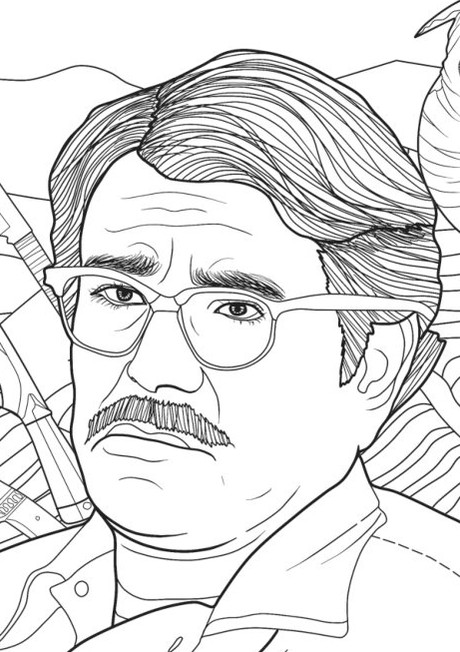
- BornJalisco, Mexico, 7 February 1934
- Came to the United States1950, aged sixteen
- Victims25 — four never identified
- KillingsBetween roughly 1 February and 21 May 1971
- Convicted18 January 1973; overturned 1978; convicted again 1982
- Died4 March 2019, aged 85, in custody in California
On 19 May 1971 a peach farmer in Sutter County, California, noticed a freshly dug hole between the trees on his land. It had not been there the day before, and it was roughly the size and shape of a grave. He called the sheriff. A body was in it by the following day.
Over the next fortnight investigators worked their way along the orchards beside the Feather River, north of Yuba City. By 4 June 1971, when the digging stopped, they had recovered twenty-five bodies. It was, at that point, the largest mass murder case known in the United States.
Who the victims were
This is the part most retellings get wrong, and it matters. The twenty-five were transient farm labourers, men aged roughly forty to sixty-four who followed the harvests and lived much of the year on skid row in Marysville. Most had criminal records. Four were never identified at all, and remain unidentified.
Twenty-four had been stabbed or slashed, with wounds consistent with a knife or a machete; one had been shot in the head. Investigators put the killings between about 1 February and 21 May 1971 — a span of nearly four months, during which no one reported any of them missing.
That is the actual horror of the case. It was not that the murders were ingenious. It was that the victims were men whose absence no one was positioned to notice.
The labour contractor
Juan Vallejo Corona was born in Jalisco, Mexico, on 7 February 1934, and entered the United States in 1950 at the age of sixteen. He worked in the fields, and by 1971 he had moved up to labour contractor — the man who assembled crews and placed them with the ranches. The men in the graves were men he had hired.
He was arrested on 26 May 1971 in Yuba City, a week after the first hole was found. The evidence recovered included meat receipts signed in his name found in the graves themselves, Bank of America deposit slips carrying his name and address, bloodstained knives, a machete, a pistol, and bloodstained clothing. There was also a work ledger listing thirty-four names and dates, which the prosecution called a death list and the defence called what it was on its face — a contractor's record of who he had hired and when.
Two trials, nine years apart
The first trial ran from 11 September 1972 to 18 January 1973, moved on a change of venue to Fairfield, in Solano County. He was convicted on all twenty-five counts of first-degree murder and given twenty-five life terms. California had no death penalty in force at the time of sentencing.
On 18 May 1978 the California Court of Appeal overturned the conviction, holding that his legal representation had been incompetent — his trial lawyer had taken the case on terms that gave him the book and film rights, and had put on no real defence.
The retrial ran from 22 February to 23 September 1982 in Hayward. He was convicted again on all counts. He was denied parole repeatedly over the following decades, the last hearing in 2016, and died in custody on 4 March 2019 at the age of eighty-five.
Why a case this large is barely remembered
Twenty-five victims should have made this one of the most familiar cases in American crime, and it is not. Part of the reason is that it closed quickly: an arrest within a week leaves no manhunt, no mystery, no decades of speculation. Part of it is that Corona never gave an account of the murders that anyone could use, so there is no motive to argue about.
And part of it is that the dead were poor, itinerant, and in four cases nameless. A case is remembered in proportion to how much its victims were missed, and these men were chosen precisely because they would not be.
Questions people ask
How many people did Juan Corona kill?
Twenty-five bodies were recovered and he was convicted on twenty-five counts of first-degree murder, at two separate trials. Four of the victims have never been identified.
Why was his first conviction overturned?
In 1978 the California Court of Appeal found his legal representation had been incompetent. His trial lawyer had taken the case in exchange for the book and film rights and mounted no meaningful defence. He was retried in 1982 and convicted again.
Was Juan Corona executed?
No. California had no death penalty in force when he was sentenced in 1973. He served life terms and died in custody on 4 March 2019, aged eighty-five.
Was he related to the farm workers he killed?
No, but he employed them. He was a labour contractor who assembled crews for the orchards, which is how he had access to men whose movements nobody tracked.
If you want a book of these
Bloody America — One killer for every state, drawn as a map of the country through its worst cases.
Get the next one first
New books go out to this list before they go anywhere else. Joining also gets you the four sample pages from the back of the books — print-quality, single-sided.
One email to confirm it’s you. Click the link in it and the pages arrive. No spam, unsubscribe in one click — see the privacy notice.
Check your inbox and click the confirmation link — the pages land right after. Nothing within a few minutes? Look in your spam folder.
Sources
Every date and name on this page was checked against at least two of the following. Where they disagree, the disagreement is stated in the text rather than resolved silently.
- Juan CoronaWikipedia
- Juan Corona, Yuba City Serial Killer, Dead at 85KQED, 2019
- People v. Corona (1978) — appeal judgmentCalifornia Court of Appeal, via FindLaw
- Darkness by the river: The Juan Corona FilesAppeal-Democrat