Case file
Graham Young: the Teacup Poisoner who was let out to poison again
At fourteen he poisoned his family and was sent to Broadmoor. Eight years later his doctor recommended his release. Within months of his release, the men he made tea for at work began to die.
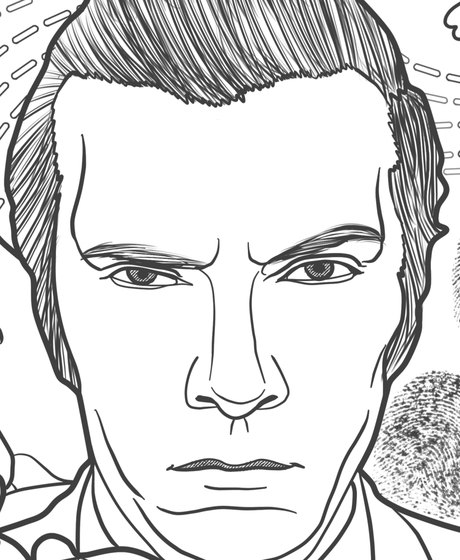
- Born7 September 1947, Neasden, north-west London
- Known asThe Teacup Poisoner; the St Albans Poisoner
- PoisonsAntimony (tartar emetic), belladonna, thallium
- 1962Pleaded guilty to poisoning his father, sister and a school friend; sent to Broadmoor at 14
- 1972Convicted at St Albans of two murders, two attempted murders and two counts of administering poison
- SentenceLife imprisonment
- Died1 August 1990, HM Prison Parkhurst, Isle of Wight, aged 42
Graham Young is usually introduced as the Teacup Poisoner, which makes him sound like a curiosity. The record is darker than the nickname. He poisoned his own family as a schoolboy, was locked in Broadmoor at fourteen, and was released at twenty-three on the recommendation of the doctor treating him. Within months he was making the tea at a small factory in Hertfordshire, and two of the men who drank it were dead.
The case is unusually well documented, because it ended up in Parliament. On the day Young was convicted in 1972, the Home Secretary stood up in the House of Commons to explain how a known poisoner had been released, and what would change. Much of what follows rests on that statement, recorded in Hansard, alongside the standard accounts listed at the end. Where those accounts disagree, it says so.
A boy and a poisons register
He was born on 7 September 1947 in Neasden, north-west London. His mother, Bessie, died of tuberculosis when he was a few months old, and he spent his first years with an aunt, Winnie, before going back to his father, Fred, after Fred remarried. His stepmother was Molly Young. He had an older sister, Winifred.
By his early teens he was fixated on poisons, and also on Nazism and black magic. He bought antimony from local chemists by lying about his age and signing the poisons register under a false name, M. E. Evans. In the early 1960s that was all it took.
The family, 1961–1962
Through 1961 the Young household kept falling ill. He was putting antimony, in the form of tartar emetic, into their food and drink. A school friend, Chris Williams, was poisoned repeatedly and survived. In November 1961 his sister Winifred was poisoned with belladonna in her tea. His father was taken to hospital and diagnosed with antimony poisoning; he survived too.
Molly Young died on 21 April 1962. Her death was put down to natural causes, a prolapsed disc in the spine, and nobody at the time connected it to poison. She was cremated, so there was never a body to test. Young later said he had poisoned her. He was never charged with her death.
Broadmoor at fourteen
He was arrested in May 1962, aged fourteen, after a science teacher found bottles of poison and notes in his desk and he was interviewed by a psychiatrist. In July 1962, at the Central Criminal Court, the Old Bailey, he pleaded guilty to three counts of administering poison, to his father, his sister and his school friend. All three had recovered.
He was detained in Broadmoor under the Mental Health Act 1959, classed as suffering from psychopathic disorder, with a restriction that he could not be released for fifteen years without the Home Secretary's consent. He was among the youngest patients the hospital had ever held.
Soon after he arrived, another patient, John Berridge, died of cyanide poisoning. It was recorded as suicide. Young was suspected, not least because he talked about extracting cyanide from laurel leaves, but nothing was ever proven. Later there were other incidents: a cleaning agent in a nurse's coffee, and sugar soap in a tea urn.
Released
In June 1970 his psychiatrist at Broadmoor, Dr Edgar Udwin, reported what Hansard records as profound changes in him and recommended release. He is reported to have told a nurse before he left that he would kill one person for every year he had spent inside.
In February 1971, aged twenty-three, he was conditionally discharged. The conditions were ordinary ones: live at a stated address, see a probation officer, attend a psychiatric outpatient clinic. He was sent first to a Government Training Centre in Slough for a storekeeping course.
Within a few months he had a job as a storeman at John Hadland Ltd in Bovingdon, Hertfordshire, a firm that made optical and photographic equipment. The company had a reference connected to his Broadmoor treatment. It did not say he had been detained for poisoning people. One of his jobs was making tea and coffee for his colleagues.
The Bovingdon bug
Within weeks, people at the works started falling ill: stomach pains, then numbness and pain in the legs, then, for some, hair falling out. The staff called it the Bovingdon bug. By some accounts around seventy employees had symptoms at one point or another.
Bob Egle, the head storeman and Young's immediate boss, died on 7 July 1971, aged 59. At the time his death was put down to a form of polyneuritis with bronchopneumonia. Fred Biggs, another worker, fell ill that autumn and died on 19 November 1971. (His age is given as 56 in some accounts and 60 in others.) Two more colleagues, Jethro Batt and David Tilson, survived thallium poisoning. Ron Hewitt and Diana Smart, a receptionist, were poisoned and survived.
Young was using antimony again, and now thallium, dissolved in the tea and coffee he brought round. He had bought his supplies from a London chemist.
Why thallium was so hard to see
Thallium salts are colourless, odourless and almost tasteless, and they dissolve in water. For decades they were sold as rat and ant poison before most countries banned them. Poisoning follows a recognisable course: stomach pain, nausea and vomiting within hours; painful nerve damage in the feet and legs after a few days, often described as walking on hot coals; and sudden hair loss after two or three weeks. The antidote is Prussian blue, but only if someone thinks to look for thallium.
In 1961 Agatha Christie had published The Pale Horse, a novel in which thallium poisoning is described closely enough to be recognised. Whether or not any doctor at Bovingdon had read it, nobody put the symptoms together while Young was still making the tea.
How he gave himself away
After the second death, the firm's medical officer, Dr Iain Anderson, spoke to staff at a meeting about the illness. Young asked him whether heavy-metal poisoning, thallium in particular, had been ruled out, and showed far more knowledge of toxicology than a storeman should have. Anderson took it to management, and the firm called the police. A records check turned up the 1962 conviction.
Young was arrested at the home of relatives in Sheerness, Kent, on the night of 20–21 November 1971; accounts differ on which of the two dates to give. He had thallium on him. In his room police found poisons, Nazi imagery and a diary recording doses and their effects on named colleagues. He said the diary was notes for a novel.
The trial
The trial ran at St Albans Crown Court from 19 to 29 June 1972. Young pleaded not guilty. The most striking evidence came from Bob Egle's cremated ashes, in which scientists found traces of thallium, turning a death recorded as illness into murder.
On 29 June 1972 the jury convicted him of murdering Bob Egle and Fred Biggs, of attempting to murder Jethro Batt and David Tilson, and of two counts of administering poison, to Diana Smart and Ron Hewitt. He was sentenced to life imprisonment; several accounts describe it as four life terms, one on each of the murder and attempted-murder counts.
What changed because of him
The same day, Home Secretary Reginald Maudling made a statement to both Houses of Parliament. As interim measures, no patient would be discharged from a special hospital without a second consultant psychiatrist agreeing, and supervising officers would keep in touch with employers, who would be "sufficiently informed" about the person they were taking on.
He also announced an urgent review by Sir Carl Aarvold, the Recorder of London, with Professor Denis Hill and G. P. Newton. Their report, published in January 1973 as Cmnd 5191, led to an independent advisory board that scrutinises proposed releases of restricted patients, often called the Aarvold Board. A 1975 written answer in Parliament confirms that the procedures were tightened in 1972 after Young's arrest and revised again in September 1973 on Aarvold's recommendation. A wider inquiry into mentally abnormal offenders, the Butler Committee, was set up the same year.
Death
Graham Young died in his cell at HM Prison Parkhurst on the Isle of Wight on 1 August 1990, a month before his 43rd birthday. The cause was recorded as a heart attack. There has been speculation that he killed himself or was poisoned by other prisoners; none of it has been substantiated.
Books and the film
His sister Winifred wrote Obsessive Poisoner: The Strange Story of Graham Young (Robert Hale, 1973). The journalist Anthony Holden's The St Albans Poisoner was first published by Hodder & Stoughton in 1974 and reissued in 1995. That was the year of The Young Poisoner's Handbook, a black comedy directed by Benjamin Ross with Hugh O'Conor as Young, loosely based on his life. The film takes liberties; the dates above do not.
Graham Young timeline
- 7 September 1947Born in Neasden, north-west London.
- 1961Poisons his family and a school friend with antimony; his sister with belladonna in November.
- 21 April 1962Stepmother Molly dies; the death is put down to natural causes.
- May 1962Arrested at 14.
- July 1962Pleads guilty at the Old Bailey to three counts of administering poison; detained in Broadmoor.
- June 1970His Broadmoor psychiatrist recommends release.
- February 1971Conditionally discharged, aged 23.
- 1971Starts as a storeman at John Hadland Ltd, Bovingdon, making the tea.
- 7 July 1971Bob Egle dies.
- 19 November 1971Fred Biggs dies.
- 20–21 November 1971Arrested in Sheerness, Kent.
- 19–29 June 1972Trial at St Albans Crown Court; convicted on 29 June and sentenced to life.
- 29 June 1972The Home Secretary's statement to Parliament; the Aarvold review is announced.
- January 1973The Aarvold report is published.
- 1 August 1990Dies at HM Prison Parkhurst, aged 42.
Questions people ask
How many people did Graham Young kill?
He was convicted of two murders, Bob Egle and Fred Biggs, his colleagues at John Hadland Ltd in 1971. He later said he had also poisoned his stepmother Molly, who died in 1962, but he was never charged with her death. He poisoned many more people who survived.
What poison did Graham Young use?
Antimony (tartar emetic) on his family as a teenager, belladonna on his sister, and thallium, together with antimony, on his colleagues in 1971. Thallium is colourless, odourless and almost tasteless.
How was Graham Young caught?
At a staff meeting about the illness at the works, he asked the company doctor whether thallium poisoning had been ruled out. The doctor reported it, the firm called the police, and a records check revealed his 1962 conviction for poisoning.
Why was Graham Young released from Broadmoor?
In June 1970 his psychiatrist reported profound changes in him and recommended release. He was conditionally discharged in February 1971. After his conviction in 1972 the rules were changed: a second psychiatrist had to agree to any release, employers had to be informed, and the Aarvold review led to an independent advisory board on releases.
Is The Young Poisoner's Handbook a true story?
It is a 1995 black comedy loosely based on Graham Young's life, with Hugh O'Conor in the lead. It changes names and events; the factual accounts are his sister Winifred's 1973 book and Anthony Holden's The St Albans Poisoner (1974).
The page this portrait comes from
The full page — Graham Young at the size you color him, with the case details drawn in around the portrait — is in Bloody Alphabet. Twenty-three killers, one to a letter, each drawn as a full-page portrait with the objects and details of the case around it.
Get the next one first
New books go out to this list before they go anywhere else. Joining also gets you the four sample pages from the back of the books — print-quality, single-sided.
One email to confirm it’s you. Click the link in it and the pages arrive. No spam, unsubscribe in one click — see the privacy notice.
Check your inbox and click the confirmation link — the pages land right after. Nothing within a few minutes? Look in your spam folder.
Sources
Every date and name on this page was checked against at least two of the following. Where they disagree, the disagreement is stated in the text rather than resolved silently.
- Graham Young (statement by the Home Secretary)Hansard, House of Commons, 29 June 1972
- The Case of Graham YoungHansard, House of Lords, 29 June 1972
- Broadmoor Releases (Procedure)Hansard, written answer, 8 December 1975
- Graham YoungWikipedia
- Graham YoungCrime+Investigation UK
- Graham YoungBiography.com
- Graham Young, the St. Albans Poisoner (Crime Library, Johnny Sharp)via Murderpedia
- Some Observations on the Supervision of Dangerous Offender PatientsBritish Journal of Psychiatry
- Thallium poisoningWikipedia
- Thallium poisoningDermNet
- Butler CommitteeWikipedia
- Obsessive Poisoner (Winifred Young, 1973)Open Library
- The Young Poisoner's HandbookWikipedia
More case files
- Ted Bundy timeline: every verified date, 1946 to 1989Four years of attacks across six states, two jailbreaks, three trials and a decade on death row, laid out in…
- Genene Jones: the nurse behind San Antonio's “Death Shift”Children kept dying on one shift in one intensive care unit. The hospital changed its staffing and said…
- Lizzie Halliday: the first woman sentenced to the electric chairShe was condemned to the electric chair in June 1894 and never sat in it. Twelve years later she killed…