Case file
Aileen Wuornos: seven men, six death sentences, and the myth of the “first female serial killer”
She was billed as America's first female serial killer. She was not. What she was is documented in four Florida Supreme Court opinions: seven men in under a year, and a label the press gave her that was wrong from the start.
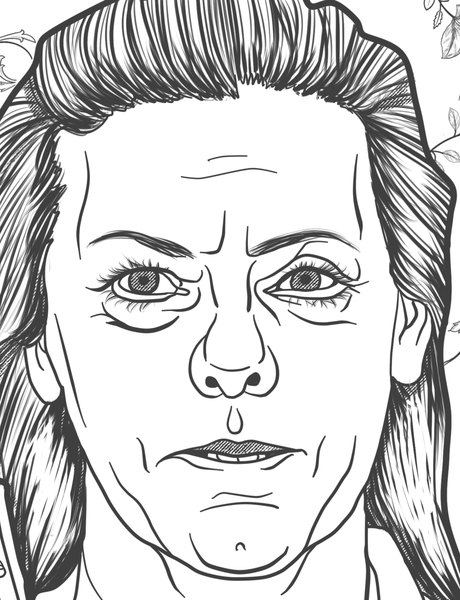
- BornAileen Carol Pittman, 29 February 1956, Rochester, Michigan
- KillingsSeven men, December 1989 – November 1990, in central and northern Florida
- Arrested9 January 1991, the Last Resort bar, Port Orange, Florida
- ConvictionsMallory murder (jury verdict, January 1992); five more by plea
- SentencesSix death sentences
- Executed9 October 2002, lethal injection, Florida State Prison near Starke, aged 46
Aileen Wuornos is one of the most notorious female serial killers in American history, and she is still routinely described as the country's first. She was not the first, and the label says more about 1991 than about her. What she did is better documented than most cases of its kind: four opinions of the Florida Supreme Court set out the killings one by one, and the state's capital-case docket records every plea, sentence and appeal.
This page follows those records. The victims are named, because the men she killed are usually the least-remembered part of the story. Where the sources disagree on a date or an age, the page says which it uses and why.
Before Florida
She was born Aileen Carol Pittman on 29 February 1956 in Rochester, Michigan. Her parents had separated before she was born. Her father, Leo Dale Pittman, was a convicted child sex offender who died in prison in 1969. In January 1960 her mother left the children, and her maternal grandparents, Lauri and Britta Wuornos, raised them and adopted Aileen and her older brother Keith. She later alleged that her grandfather abused her. At fourteen she became pregnant and gave birth, in March 1971, at a home for unwed mothers; the baby was placed for adoption. Keith died of cancer in 1976.
She hitchhiked to Florida around 1976 and spent the next decade in and out of trouble: an armed robbery of a convenience store in Edgewater in 1981, prison from 1982 to 1983, a string of aliases including Lori Grody and Cammie Marsh Greene. In 1986, in a bar in the Daytona Beach area, she met Tyria Moore, then 24. They lived together for about four and a half years. Moore worked as a motel maid; Wuornos supported them through sex work.
The seven men
All seven were middle-aged or older men travelling alone by car. She was never charged with the death of Peter Siems, because his body was never found.
- 30 Nov – 1 Dec 1989Richard Mallory, 51, a Clearwater-area business owner. Last seen on 30 November; by the court record, killed in the early hours of 1 December. His car was found near Ormond Beach that day and his body in woods in Volusia County on 13 December.
- May 1990David Spears, 43, a construction worker. His body was found on 1 June 1990 off US 19 in Citrus County. (Wikipedia gives his age as 47; the other sources say 43.)
- 31 May 1990Charles Carskaddon, 40, a part-time rodeo worker, was last seen. Found on 6 June 1990 in Pasco County.
- June 1990Peter Siems, 65, a retired merchant seaman, left Jupiter, Florida. He has never been found. His car was wrecked near Orange Springs on 4 July 1990.
- 30 July 1990Troy Burress, 50, a sausage salesman from Ocala, vanished on his delivery route. Found on 4 August 1990 in woods off State Road 19, Marion County.
- 11 September 1990Charles “Dick” Humphreys, 56, a retired Air Force major and former police chief who had worked as a state child-abuse investigator. Found the next day in Marion County.
- 18 November 1990Walter Antonio, 62, a trucker and reserve police officer, was killed. Found on 19 November 1990 near a logging road in Dixie County.
The car at Orange Springs
The case broke on a detail. On 4 July 1990 Wuornos and Moore crashed Peter Siems' car near Orange Springs and walked away from it. Witnesses saw two women leave the wreck. Their descriptions became composite sketches, and the sketches went out through the media.
A palm print on the inside door handle of Siems' car matched Wuornos. Meanwhile victims' belongings had been turning up in pawn shops, and a thumbprint on a pawn receipt signed with one of her aliases matched both the car and her earlier Florida arrest records.
On 9 January 1991 she was arrested at the Last Resort, a biker bar in Port Orange, on an outstanding weapons warrant issued under an alias. The next day police found Tyria Moore at her sister's home in Pittston, Pennsylvania. Moore agreed to come back to Florida and co-operate in exchange for immunity. Under police direction she made recorded phone calls to Wuornos in the Volusia County jail, saying she was afraid of being charged herself. Wuornos said she would confess to keep her out of it. On 16 January 1991 she did, against the advice of a public defender.
Self-defence, then not
In her confessions she said the men had tried to rape or attack her and that she had killed them in self-defence. The Florida Supreme Court noted that her confessions were inconsistent with one another on important points. Years later, in filings in 2001, she said she had killed the men to rob them, and that she would kill again. Later still, speaking to the documentary maker Nick Broomfield, she went back to self-defence. She gave all three accounts; none of them can be treated as the final word.
The Mallory trial
She was tried first for the murder of Richard Mallory, in January 1992, in DeLand, the Volusia County seat, before Judge Uriel Blount. Tyria Moore testified for the prosecution. The judge allowed evidence of the other killings to be heard as similar-crimes evidence. On 27 January 1992 the jury found her guilty of first-degree murder and armed robbery. Three days later it unanimously recommended death, and on 31 January 1992 she was sentenced to death.
What the jury did not hear was that Mallory had a record. In the late 1950s in Maryland he had been convicted of a sex crime and spent about ten years in an institution for sex offenders. The record came out in the autumn of 1992, most prominently through Dateline NBC, after she was already on death row. It does not prove her account of that night. Critics of the case pointed out that investigators had never run Mallory's name through federal criminal records.
Six death sentences
On 31 March 1992 she pleaded no contest to the murders of Humphreys, Burress and Spears, saying she wanted to get right with God, and on 15 May 1992 she received three more death sentences. She pleaded guilty to the murders of Walter Antonio and Charles Carskaddon and was sentenced to death for both, in February 1993 according to the state's capital-case docket. (Some accounts put the Carskaddon sentence in November 1992; the docket and the court's own opinion support February 1993.) In total: six death sentences, for six of the seven killings.
Dropping the appeals
The Florida Supreme Court upheld the sentences between 1994 and 1996. In 2001 she asked to dismiss her lawyers and drop her appeals, and on 20 July 2001 a judge found her competent to do so. The Supreme Court allowed it on 1 April 2002. Governor Jeb Bush signed her death warrant. On 30 September 2002 he stayed the execution and ordered an examination by three psychiatrists; they found she understood what was going to happen and why, and he lifted the stay. According to the state attorney who watched it, the interview lasted thirty minutes.
The execution
Aileen Wuornos was executed by lethal injection at Florida State Prison near Starke on 9 October 2002, and pronounced dead at 9:47 a.m. She was 46. She was the tenth woman executed in the United States since executions resumed in 1976, and the second in Florida, after Judy Buenoano in 1998. She declined a special last meal. Her last words, in the short form every account agrees on, were: “I'm sailing with the Rock, and I'll be back like Independence Day with Jesus.” She was cremated and her remains taken to Michigan.
Why she was not the “first female serial killer”
After her arrest the label was everywhere, and it has never gone away. It was wrong from the start. Jane Toppan, a Massachusetts nurse arrested in 1901, confessed to 31 murders. Belle Gunness killed on her Indiana farm in the early 1900s. Nannie Doss is another. Biography.com and History.com both describe the label as inaccurate.
It stuck because she did not fit the pattern people expected of a woman who killed. The familiar cases involved poison and victims close to home: husbands, children, patients. Wuornos killed strangers, with a gun, by the side of the road. The FBI of the time had little framework for female offenders, and some investigators called her the first. It made a better headline than it did history.
Monster and the documentaries
Nick Broomfield made two documentaries about her: Aileen Wuornos: The Selling of a Serial Killer (1992, released in some markets in 1993) and, with Joan Churchill, Aileen: Life and Death of a Serial Killer (2003), which includes his final interview with her the day before she died. The feature film Monster (2003) starred Charlize Theron as Wuornos and Christina Ricci as a character based on Tyria Moore. Theron won the Academy Award for Best Actress at the 76th Academy Awards, on 29 February 2004, which would have been Wuornos's 48th birthday.
Questions people ask
How many people did Aileen Wuornos kill?
Seven men, between December 1989 and November 1990: Richard Mallory, David Spears, Charles Carskaddon, Peter Siems, Troy Burress, Charles Humphreys and Walter Antonio. She received six death sentences; she was never charged over Siems, whose body was never found.
Was Aileen Wuornos the first female serial killer?
No. She was widely but wrongly called America's first female serial killer after her 1991 arrest. Earlier cases include Jane Toppan, who confessed to 31 murders in 1901, Belle Gunness and Nannie Doss.
How was Aileen Wuornos caught?
Witnesses saw two women leave Peter Siems' crashed car in July 1990, leading to composite sketches. Her palm print was found in the car and her thumbprint on a pawn receipt for a victim's property. She was arrested at the Last Resort bar in Port Orange on 9 January 1991, and confessed on 16 January after recorded calls from Tyria Moore.
What happened to Tyria Moore?
She was found in Pennsylvania the day after Wuornos's arrest, agreed to co-operate in exchange for immunity, made recorded calls that led to the confession, and testified for the prosecution at the Mallory trial. She was never charged.
When was Aileen Wuornos executed, and what were her last words?
On 9 October 2002, by lethal injection at Florida State Prison near Starke; she was pronounced dead at 9:47 a.m. Her last words began: “I'm sailing with the Rock, and I'll be back like Independence Day with Jesus.”
Did Charlize Theron win an Oscar for playing her?
Yes. Theron won Best Actress for Monster (2003) at the 76th Academy Awards on 29 February 2004.
The page this portrait comes from
The full page — Aileen Wuornos at the size you color her, with the case details drawn in around the portrait — is in Bloody Alphabet. Twenty-three killers, one to a letter, each drawn as a full-page portrait with the objects and details of the case around it.
American Female Serial Killers — the companion book: sixty American women who killed, one portrait to a page, with the facts of each case set alongside the drawing.
Get the next one first
New books go out to this list before they go anywhere else. Joining also gets you the four sample pages from the back of the books — print-quality, single-sided.
One email to confirm it’s you. Click the link in it and the pages arrive. No spam, unsubscribe in one click — see the privacy notice.
Check your inbox and click the confirmation link — the pages land right after. Nothing within a few minutes? Look in your spam folder.
Sources
Every date and name on this page was checked against at least two of the following. Where they disagree, the disagreement is stated in the text rather than resolved silently.
- Wuornos v. State, 644 So.2d 1000 (Mallory)Florida Supreme Court, 1994
- Wuornos v. State, 644 So.2d 1012 (Humphreys, Burress, Spears)Florida Supreme Court, 1994
- Wuornos v. State, No. 81,466 (Carskaddon)Florida Supreme Court, 1995
- Wuornos v. State, 676 So.2d 972 (Antonio)Florida Supreme Court, 1996
- Case update: Wuornos, AileenFlorida Legislature, Commission on Capital Cases
- Aileen WuornosWikipedia
- Aileen WuornosBiography.com
- Was Aileen Wuornos the first female serial killer?Biography.com
- This Day in History, November 30History.com
- Aileen Wuornos: the arrestCrime+Investigation UK
- Wuornos case studyCapital Punishment in Context
- Jury recommends death for Aileen WuornosUPI, 30 January 1992
- Judge sentences Aileen Wuornos to deathUPI, 31 January 1992
- Female serial killer wants deathCBS News, 20 July 2001
- Woman serial killer executedCBS News, 9 October 2002
- Serial killer is put to death (AP)Deseret News, 9 October 2002
- Peter Abraham SiemsThe Charley Project
- Is Aileen Wuornos the queen of serial killers?Psychology Today, 2025
- The 76th Academy Awards (2004)Academy of Motion Picture Arts and Sciences
More case files
- Graham Young: the Teacup Poisoner who was let out to poison againAt fourteen he poisoned his family and was sent to Broadmoor. Eight years later his doctor recommended his…
- Ted Bundy timeline: every verified date, 1946 to 1989Four years of attacks across six states, two jailbreaks, three trials and a decade on death row, laid out in…
- Genene Jones: the nurse behind San Antonio's “Death Shift”Children kept dying on one shift in one intensive care unit. The hospital changed its staffing and said…